The Gales of November: Why Lake Erie's Worst Storms Come in the Fall
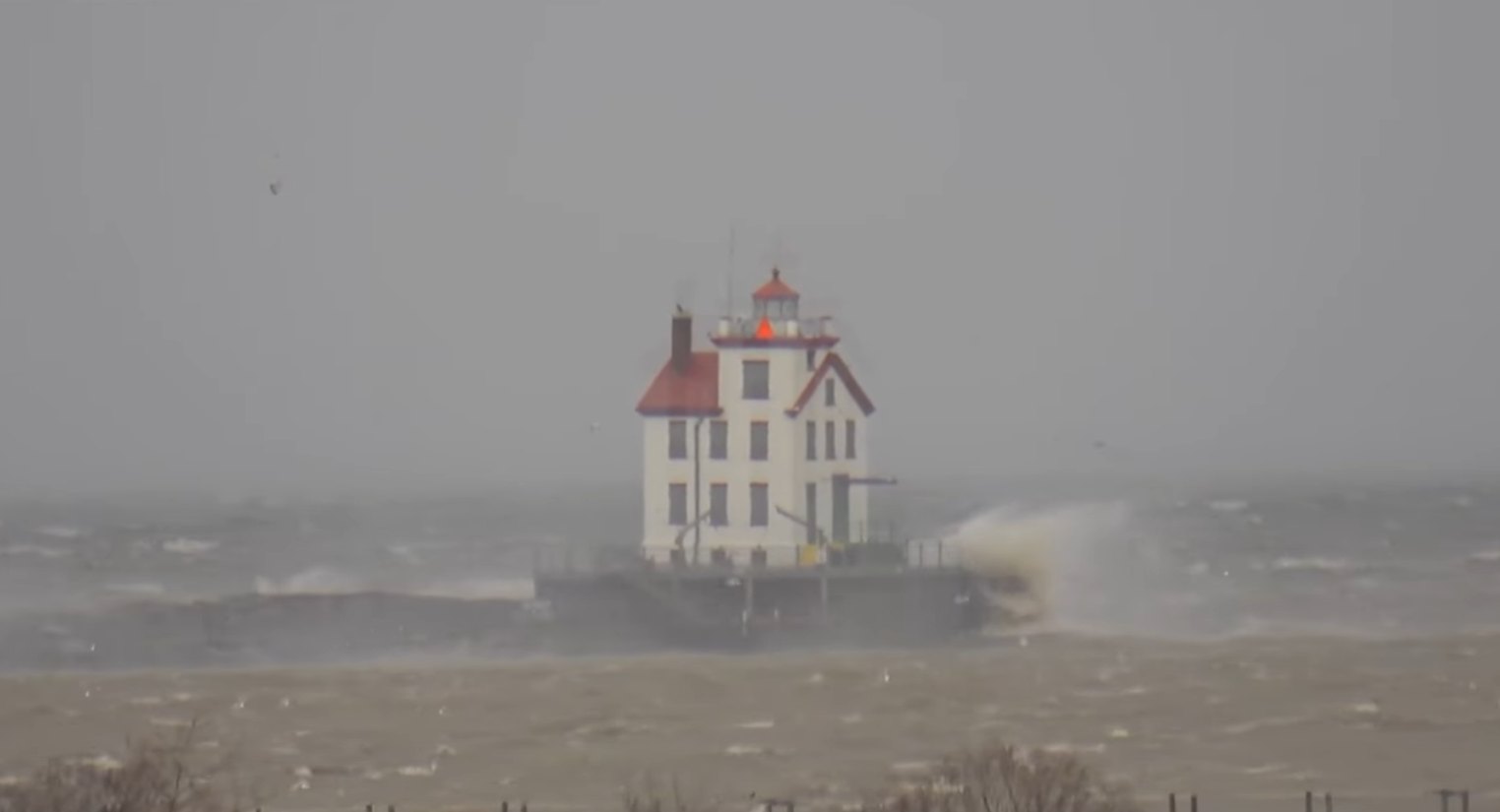
Right now Lake Erie is still warm. On October 3 our buoy board had Toledo at 65°F, Lorain at 67°F, and the Cleveland crib at 68°F. That warm water is where this story starts, because over the next few weeks it's going to meet some very cold air coming down from Canada.
Sailors have a name for what happens next: the gales of November. Fall brings Lake Erie's nastiest weather of the year, and Erie handles it worse than the other Great Lakes. Below is why, plus how to pick your days on the water as the season winds down.
Warm lake, cold air
By November the lake is still holding a lot of summer heat, but the air above it has turned cold. When a blast of Canadian air moves over water that's much warmer than it is, the difference in temperature feeds the storms moving through.
At the same time, the jet stream gets stronger and drops south as the seasons change. It steers low pressure systems right across the Great Lakes. When one of those lows strengthens over the lakes, the wind behind it can blow hard for a day or more.
Why Lake Erie gets it worse
Lake Erie is the shallowest of the Great Lakes. It averages about 62 feet deep and only reaches about 210 feet at its deepest point. It's also long and narrow, about 240 miles from Toledo to Buffalo, and it runs southwest to northeast. That's the same direction a lot of strong fall winds blow.
Put those together and you get two problems.
Short, steep waves. In deep water, waves have room to stretch out. On a shallow lake they pile up tight and steep, with very little time between them. A 6 foot sea on Erie beats you up a lot more than a 6 foot sea on a deep lake, because the next wave is right behind the last one.
Seiches. A strong, steady wind blowing down the length of the lake pushes water toward one end, like water sloshing in a bathtub. The level rises at one end and drops at the other, then sloshes back after the wind lets up. NOAA notes that Erie is known for seiches, especially when strong winds blow from southwest to northeast. In 1844, a 22 foot seiche at Buffalo breached a 14 foot sea wall and killed 78 people. Today it mostly shows up as flooding along the Buffalo waterfront and boats sitting in the mud on the west end when the water drops at Toledo.
What the marine warnings mean
The National Weather Service uses a ladder of marine headlines for the Great Lakes. The wind speeds are sustained winds, in knots.
| Small Craft Advisory | 22 to 33 knots, or waves 4 feet or higher | Most recreational boats should stay in |
| Gale Warning | 34 to 47 knots | Dangerous for everything but big ships |
| Storm Warning | 48 to 63 knots | Stay off the lake |
| Hurricane Force Wind Warning | 64 knots or more | Stay off the lake, and away from the shoreline too |
On Lake Erie the Small Craft Advisory is the one to watch. It goes up a lot in the fall, and on a shallow lake 4 foot waves are short and steep enough to swamp or roll a small boat.