Will Lake Erie Freeze This Winter? The El Niño Ice Outlook (2026–27)
Every fall the question comes up on the docks: is Lake Erie going to freeze this winter? Heading into 2026–27, the big driver is already on the table — a strong El Niño — and it tilts the odds toward a milder, below‑average ice season. But Erie is the shallowest of the Great Lakes and the quickest to react to a cold snap, so "below average" is a long way from "no ice." Here's the honest read on what the pattern favors.
One note up front: this is an outlook built on the climate pattern and Lake Erie's history, not a hard forecast. The official Great Lakes ice outlook from the U.S. National Ice Center doesn't come out until early November. We'll track the real numbers here all winter.
What's steering this winter: a strong El Niño
NOAA's Climate Prediction Center has a strong El Niño in place and strengthening, with high confidence it holds through the winter and a real chance it lands as a top‑tier (very strong) event. El Niño doesn't dictate any single day's weather, but it reliably shifts the winter odds — and for the Great Lakes, it usually shifts them warm.
For context on where that leaves Erie:
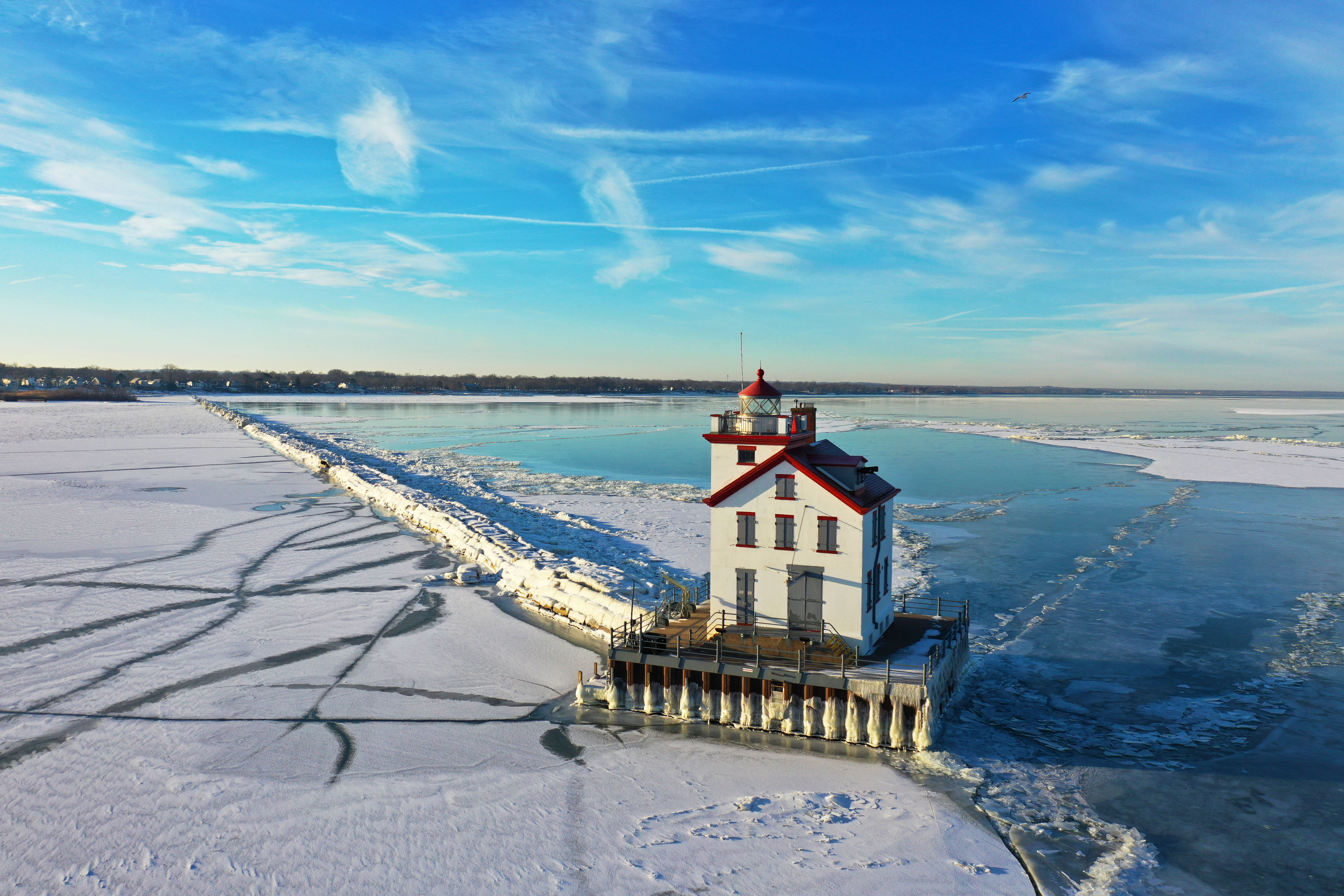
- Lake Erie averages about 68% ice cover in February, regularly tops 80%, and has frozen over completely three times (1978, 1979, 1996).
- In the last El Niño winter, 2023–24, Great Lakes ice peaked near 16% — one of the lowest on record — and Erie was essentially ice‑free by mid‑February.
- Great Lakes ice cover is down about 25% since 1973, and the ice season is nearly a month shorter.
Why El Niño usually means less ice
In an El Niño winter, mild Pacific air and a more northern storm track tend to keep the deepest Arctic outbreaks from settling over the eastern Great Lakes for long. NOAA's own analysis is blunt about the result: most moderate‑or‑stronger El Niño winters finish below the 1973–2024 average for Great Lakes ice. Stack that on top of the long‑term decline, and the baseline expectation for 2026–27 leans low.
But Lake Erie is the wild card
Here's the catch that trips up every seasonal call on this lake. Erie is normally the iciest Great Lake — and it's unpredictable for the same reason it freezes: it's shallow, so it loses heat fast and can skin over in days once a genuine Arctic blast parks over it. So the most likely outcome is a below‑average, late‑forming, on‑and‑off ice season — with the constant caveat that one sustained cold stretch can still lock up the western basin quickly, El Niño or not.
The recent playbook
The last two strong El Niño winters both ran low, and the most recent was historic:
- 2015–16 (strong El Niño): a mild winter across the Great Lakes with minimal, short‑lived ice.
- 2023–24 (El Niño): record‑low Great Lakes ice, and Lake Erie basically ice‑free by mid‑February.
The 2026–27 pattern most closely resembles those winters, so the honest expectation is below‑average, unreliable ice — unless a hard Arctic outbreak breaks through.
What it means on the water
For hard‑water anglers, a low‑ice winter means later first ice, shorter safe windows, and a less reliable season — plan around cold snaps, not the calendar. For everyone else on the lakeshore, there's a counterintuitive twist: less ice can mean more lake‑effect snow. Open water feeds moisture and heat to cold air crossing the lake, so an Erie that stays open longer can actually crank out bigger snow bands downwind through the Cleveland–Ashtabula–Erie snowbelt.
We'll track the real thing
An outlook is just odds. As the season turns, watch the water cool at your port on the Cleveland and Lorain water‑temperature pages, keep an eye on live conditions, and — while the bite's still on — work the Fall Walleye board. When the National Ice Center's official outlook drops in November, we'll break down what it means for Lake Erie right here.