The Cleveland Flats: From Iron Furnaces to Boat Slips on the Cuyahoga
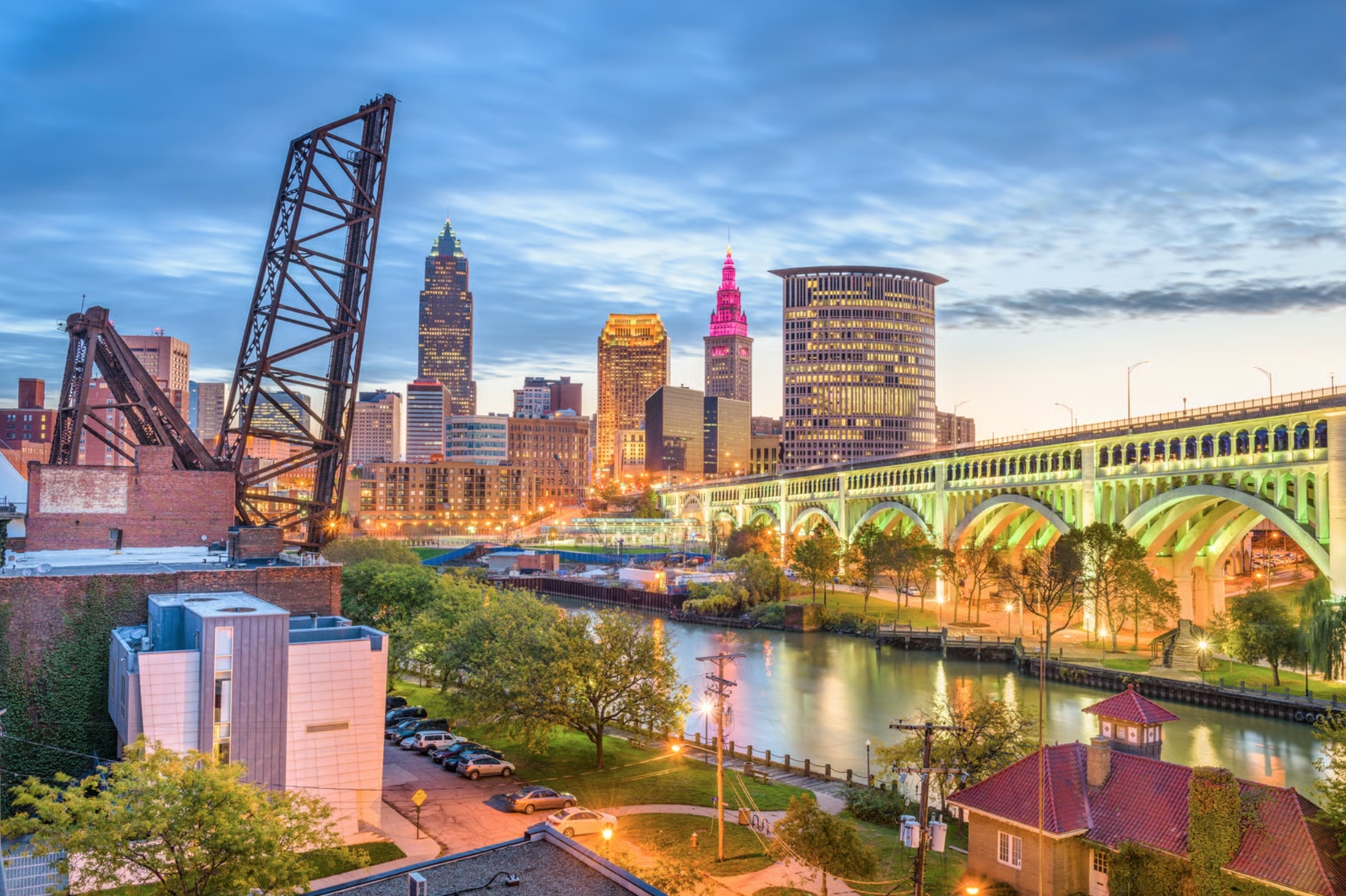
The Flats sit in the bottom of a river valley about half a mile wide, carved by the Cuyahoga as it winds through Cleveland to Lake Erie. For 200 years, whatever Cleveland was at any given moment, the Flats were the working floor where it happened.
Iron. Steel. Ships. Coal. Oil. Nightclubs. And now, apartments and boat slips.
The Industrial Valley
The first steamboat showed up at the mouth of the Cuyahoga in 1818. Nothing much happened until the Ohio and Erie Canal opened in 1827 and turned Cleveland from a small settlement into a shipping crossroads. Warehouses and docks went up on both sides of the river. By the 1850s, railroads had arrived and found the broad river valley perfect for handling freight. Rail, canal, and lake shipping all met in the same quarter mile of riverfront.
Then the furnaces came. In the second half of the 1800s, the Flats filled with iron furnaces, rolling mills, foundries, lumberyards, shipyards, flour mills, oil refineries, and chemical plants. The Superior Viaduct was completed in 1878 to connect the east and west sides of the city high above the industrial valley below. By 1900, Cuyahoga County was the fifth-largest producer of iron and steel in the nation.
In 1899, several Cleveland shipbuilders merged to form the American Ship Building Company. The steel industry wanted bigger ore carriers, and Cleveland built them. The first steel-hulled bulk carrier, the Spokane, was built in 1886. Within four years, the number of steel ships on the Great Lakes jumped from 6 to 68.
| Year | What Happened | The Number |
|---|---|---|
| 1827 | Ohio & Erie Canal opens | Shipping surges |
| 1880 | Iron ore received at Cleveland docks | 750,000+ tons |
| 1886 | Ore receipts cross 1 million | 1,000,000+ tons |
| 1886-1890 | Steel ships replace wood | 6 to 68 vessels |
| 1892 | Lumber trade peaks | 7 million board feet |
| 1890-1945 | Annual coal shipments from Cleveland | 1 million+ tons/yr |
| 1900 | Cuyahoga County iron and steel output | 968,801 tons |
The Fire and the Emptying Out
The Cuyahoga River caught fire multiple times. The 1969 fire made national news, helped launch the EPA and the Clean Water Act, and ended the industrial era of the Flats. By then, the factories were already closing. The river was so polluted with oil and chemical waste that fire was just a symptom of what decades of industry had done to the water.
The factories left. The buildings decayed. The riverfront sat abandoned for years. The Flats were empty.
Three Million Visitors a Year
Then the bars moved in. Starting in the 1980s, entrepreneurs converted old warehouses and industrial buildings into nightclubs, bars, and restaurants. Shooters on the Water opened on the west bank. The Powerhouse drew crowds on the east bank. Live music, riverfront patios, and a skyline view of downtown Cleveland.
By the early 1990s, the Flats reportedly hosted more than 3 million visitors annually. It was one of the Midwest's premier nightlife destinations and home to the highest concentration of bars in the region.
It did not last. Violent incidents, drownings, and safety concerns took the shine off. Health code violations forced closures. By 2005, the district was a shadow of what it had been. The buildings sat empty again.
The Billion Dollar Rebuild
The current version of the Flats is the most ambitious yet. Nearly $1 billion in redevelopment has reshaped the waterfront. The Flats East Bank project brought a modern office tower, the Aloft Hotel, and riverfront apartments. The Nautica Waterfront District on the west bank is working through a $405 million mixed-use plan with 664 residential units, a 150-room hotel, and a 15-story office building.
Rivergate Park opened on 6.5 acres of reclaimed industrial land for rowing, kayaking, and dragon boating. The water quality of the Cuyahoga has improved dramatically since the 1970s, with fish populations returning each year.
What It Means for Boaters
The Flats are becoming a boating destination for the first time in their history. Not ore boats and coal barges, but recreational boaters pulling up to waterfront restaurants and tying off at new dock slips along the Cuyahoga.
If you are running a boat out of Cleveland, the Flats are worth a stop. The river is navigable, the docks are expanding, and the food and drink scene is the best it has been in two decades. It is a long way from iron furnaces, but the river is still the same one.
---
Sources: Encyclopedia of Cleveland History, Case Western Reserve University; Cleveland-Rouen Historical Project; Belt Magazine; Crain's Cleveland Business; Cleveland Magazine; WKYC; Cleveland 19; NEOtrans.