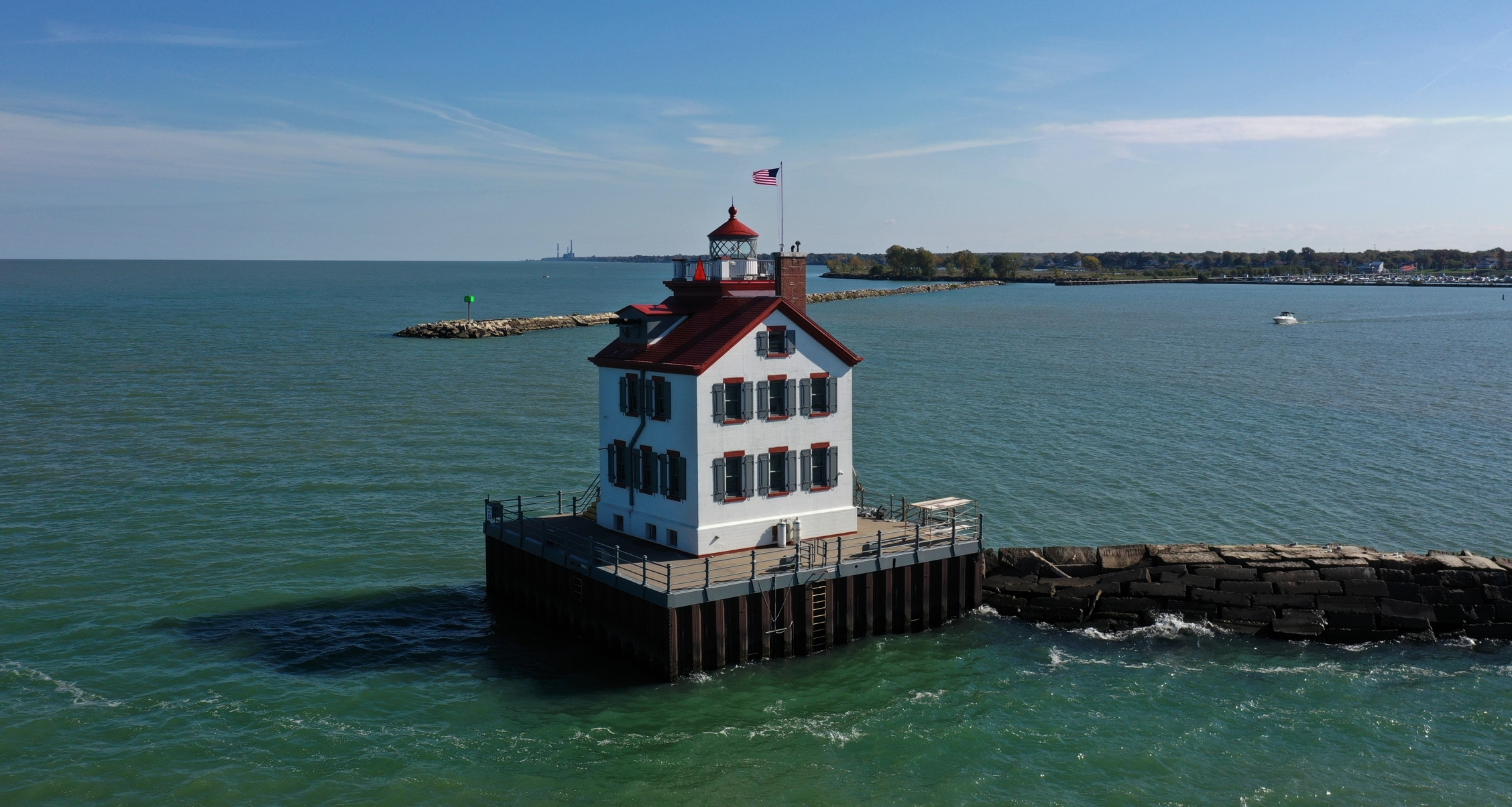
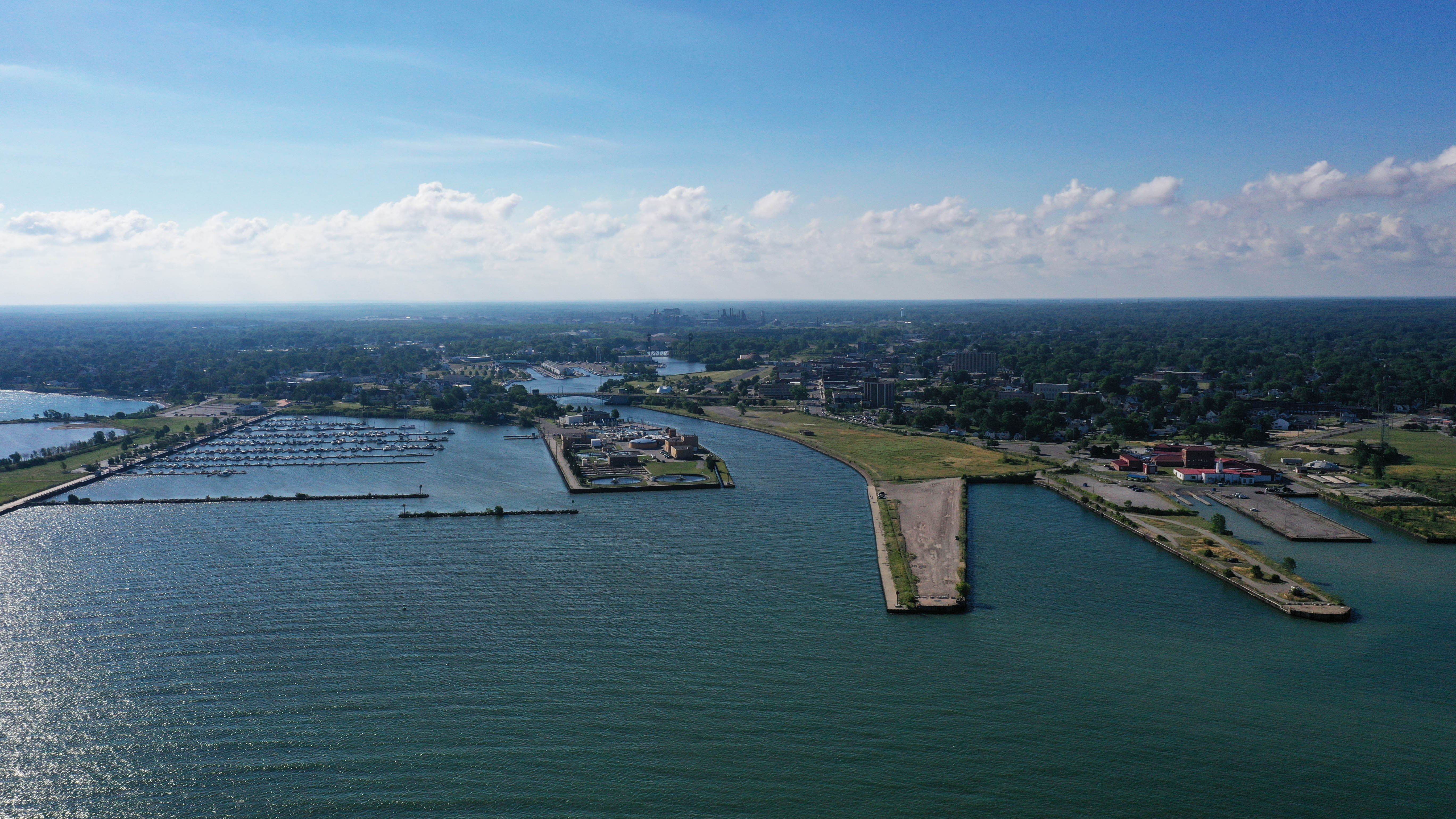
The Lorain Lighthouse has stood at the end of the west breakwater since 1917 — over a century of Lake Erie storms, fog, ice, and the occasional ship collision. But its story starts nearly a century before the concrete fortress we see today.
The Early Years: Candles, Brick, and Danger
Before there was a lighthouse, there was a candle. Lorain's first navigation aid was nothing more than a lantern hung from a pole at the river's mouth. The story of how it evolved into the structure we know today is wilder than you'd expect.
1830s
A Candle on a Stick
Lorain's first navigation light was a candle-lit lantern hung from a pole at the water's edge. That was it — a single candle guiding ships into one of Lake Erie's busiest harbors.
1836
Congress Steps In
Congress appropriated $2,600 ($65,000 in today's dollars) to build the Black River Light-Station — a cylindrical brick tower at the end of a 680-foot pier, with eight lamps fueled by lard oil.
1838
A Deadly Walk to Work
A Navy inspector reported that waves had washed people off the pier at least three times — and one person drowned trying to light the beacon. His fix? Raise the pier two feet. An elevated catwalk wasn't added until 1869.
1857
The Fresnel Lens Arrives
The tower was rebuilt and fitted with a fourth-order Fresnel lens — a French invention using glass prisms to refract parallel beams of light, visible for miles across the lake.
1871
The 32-Year Keeper
James Connolly began his tenure as lighthouse keeper. He would serve until 1903, retiring at age 75. With no dwelling provided, he paid $144/year rent from a $600 salary — leaving just $456 to support his family.
Ships kept crashing into the lighthouse, too. In 1888, a scow rammed its jib boom into the tower. In 1894, a schooner knocked the rear range tower completely over, shattering three lens lanterns. The owners had to pay for repairs.
Building the Fortress: 1910–1919
By the early 1900s, Lorain needed a proper lighthouse to mark its new breakwater. What the Army Corps of Engineers built was less lighthouse, more bunker.
1910
Floating a Fortress
The Army Corps built a wooden crib on shore — 22 feet high and 50 feet square — then floated it to the end of the west breakwater and sunk it with stone. The concrete lighthouse base was built on top.
1913
$35,000 from Congress
Congress appropriated $35,000 (roughly $1 million today) for a proper light and fog signal station. Construction blueprints were drawn in 1916.
1917
Built Like a Bunker
The lighthouse was completed with poured concrete and steel-reinforced walls. Basement: 32 inches thick. First floor: 20 inches. Second floor: 15 inches. Third floor: 10 inches. It stands 58 feet above the water.
1919
First Light
A revolving Fresnel lens began operation on April 7 — five seconds of light, five seconds of darkness. On May 13, the fog horn went live: three blasts every 30 seconds. Keepers lived on-site for the first time.
Life Inside the Lighthouse
For decades, Coast Guard keepers lived in this concrete tower on the lake, cut off from shore. Their stories paint a picture of isolation, duty, and resourcefulness.
1925
Rescue at the Lighthouse
An explosion on a Coast Guard boat near the lighthouse. Keeper Olin Stevens and assistant Ralph McGue rushed to rescue the crew. The following year, a keeper rescued an exhausted boy struggling in the harbor.
1947
$1.10 a Day
Coast Guardsman Harry Siegfried rowed a 14-foot skiff out to the lighthouse carrying food and a 2.5-gallon bucket of drinking water. He earned $1.10 a day and bought bacon, bread, and ground beef to survive. During one fog, they blew the horn for 96 straight hours.
Late 1950s
60+ Distress Calls a Month
Keeper William Deverick estimated the lighthouse handled over 60 distress calls monthly. The three-man crew was also expected to paint the entire lighthouse in their spare time — a job that took a full year, 50 gallons of paint, and 4-inch brushes.
"We didn't wear any shirts in the summer. After all, who's going to see you out there?" — Harry Siegfried, Coast Guard Engineman, stationed 1947–48
Saved by Storms and Stubbornness
In 1965, the Coast Guard decided the lighthouse was obsolete. What followed was one of the greatest preservation fights in Great Lakes history.
1965
Scheduled for Demolition
The Coast Guard awarded a $25,000 demolition contract. But when the company discovered 32-inch reinforced concrete walls, they raised the price to $75,000. A 'Save-the-Lighthouse Committee' organized immediately.
1965
Lake Erie Steps In
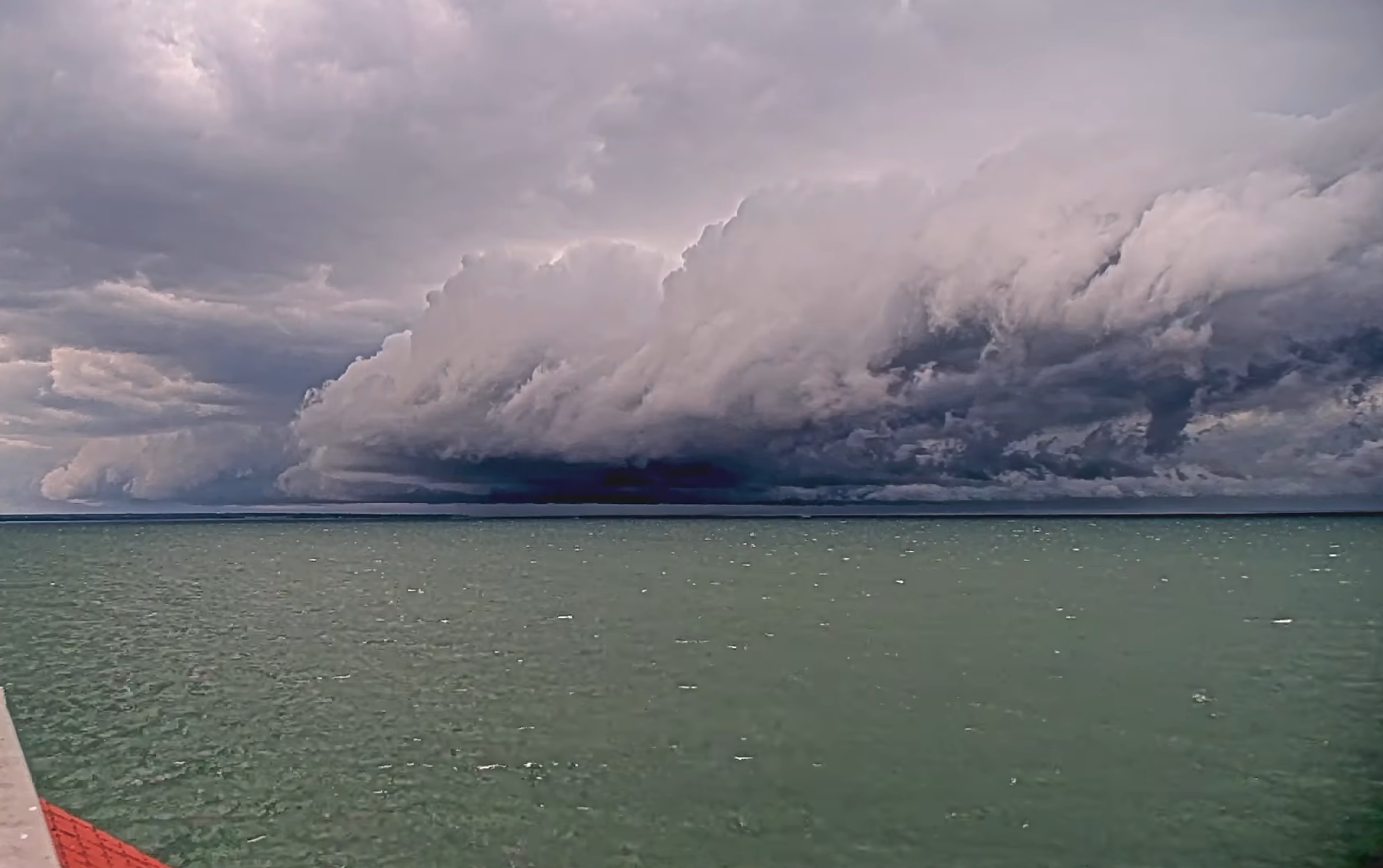
Fierce autumn storms delayed construction of the replacement light tower. The Coast Guard couldn't tear down the old lighthouse until the new one worked. Winter weather pushed the timeline further. The community won time.
1966
The Last Light
The final beam shone on January 10. The next day, power was cut. But the Save-the-Lighthouse Committee had negotiated a five-year lease — and the demolition contract was cancelled. The lighthouse would never be torn down.
1977
Sold for $1.00
The General Services Administration deeded the lighthouse to the Lorain County Historical Society for one dollar. The following year, it was placed on the National Register of Historic Places.
1990
Sold for $1.00 — Again
The Port of Lorain Foundation purchased the lighthouse for another dollar and launched a major restoration. Twenty-four local schools collected 2,861 pounds of pennies ($5,000.05) to help fund the effort.
The Restoration That Never Ends
Since the 1980s, an army of volunteers, local businesses, and schoolchildren have poured money, sweat, and creativity into bringing the lighthouse back to life.
1981
Operation Lighthouse
Seventeen local companies rallied to restore the exterior. Glidden Paint donated 160 gallons and later used the before-and-after photos in their advertising. An estimated $30,000 in donated labor and materials.
1993
$850,000 to Save the Foundation
The Army Corps of Engineers grouted the shifting base at a cost of $850,000 — more than 24 times the original $35,000 construction budget. An engineer was heard saying they wouldn't have started if they'd known the final cost.
1994
Custom Glass from Arkansas
Volunteers spent dozens of hours repairing the lantern room. Twenty-eight pieces of custom-curved glass were manufactured by a company in Fort Smith, Arkansas for $1,300.
2001
Light Returns After 35 Years
A navigational light was re-established in the lantern room — the first time it shone since the Coast Guard cut the power in 1966.
2011
The Lens Comes Home
The lighthouse's original fourth-order Fresnel lens — which had been on display in Rochester, New York for two decades — was finally returned to Lorain. It's now on loan from the Coast Guard through 2028.
Visit the Lighthouse
The Lorain Lighthouse Foundation operates tours, dinner cruises, and special events including Fourth of July fireworks viewing. The foundation relies entirely on volunteers and community donations.
- Tours and events: lorainlighthouse.com
- Fresnel lens display: Lorain Port Authority offices at Black River Landing
- Support the foundation: lorainlighthouse.com/membership-application
---
This article draws on the comprehensive chronology compiled by the Lorain Lighthouse Foundation. We're grateful for their extraordinary work preserving this history. All historical details sourced from "Lorain Lighthouse History 1917–2017" published by the Lorain Lighthouse Foundation.