Steel, Stone, and 1,000-Foot Ships: The Story of Great Lakes Shipping

If you have stood on the Lake Erie shoreline and watched a freighter slide past on the horizon, you have seen something most people never think about. That ship is part of a system that has been moving raw material across fresh water for over 170 years. Iron ore from Minnesota. Limestone from Michigan. Coal from Appalachia. All of it funneled through a network of locks, rivers, and open lake that built the industrial Midwest.
The 2026 shipping season opened on March 25 when the Army Corps of Engineers opened the Poe Lock at Sault Ste. Marie. The next day, the Paul R. Tregurtha, the longest ship on the Great Lakes at 1,013.5 feet, arrived in Duluth escorted by Coast Guard Cutter Spar through the remaining ice. Another season underway. Another year of cargo on the move.
The Locks That Made It Possible
Everything starts at the Soo. The St. Marys River drops 21 feet between Lake Superior and Lake Huron, and without a lock system, nothing gets through. The Soo Locks have been solving that problem since 1855.
Today, the Poe Lock is the only one that can handle 1,000-foot freighters. If it went down for an extended period, the entire U.S. steel supply chain would feel it within weeks. That is not speculation. The Army Corps and the Department of Homeland Security have studied the scenario, and the results are not pretty.
That is why the new lock matters. The $2.62 billion project will build a second Poe-sized chamber (1,200 x 110 x 32 feet) and is on track for 2030 completion. Phase 3, the main lock chamber excavation, is underway right now under the Kokosing-Alberici-Traylor joint venture.
Lake Erie: Where the Ore Meets the Coal
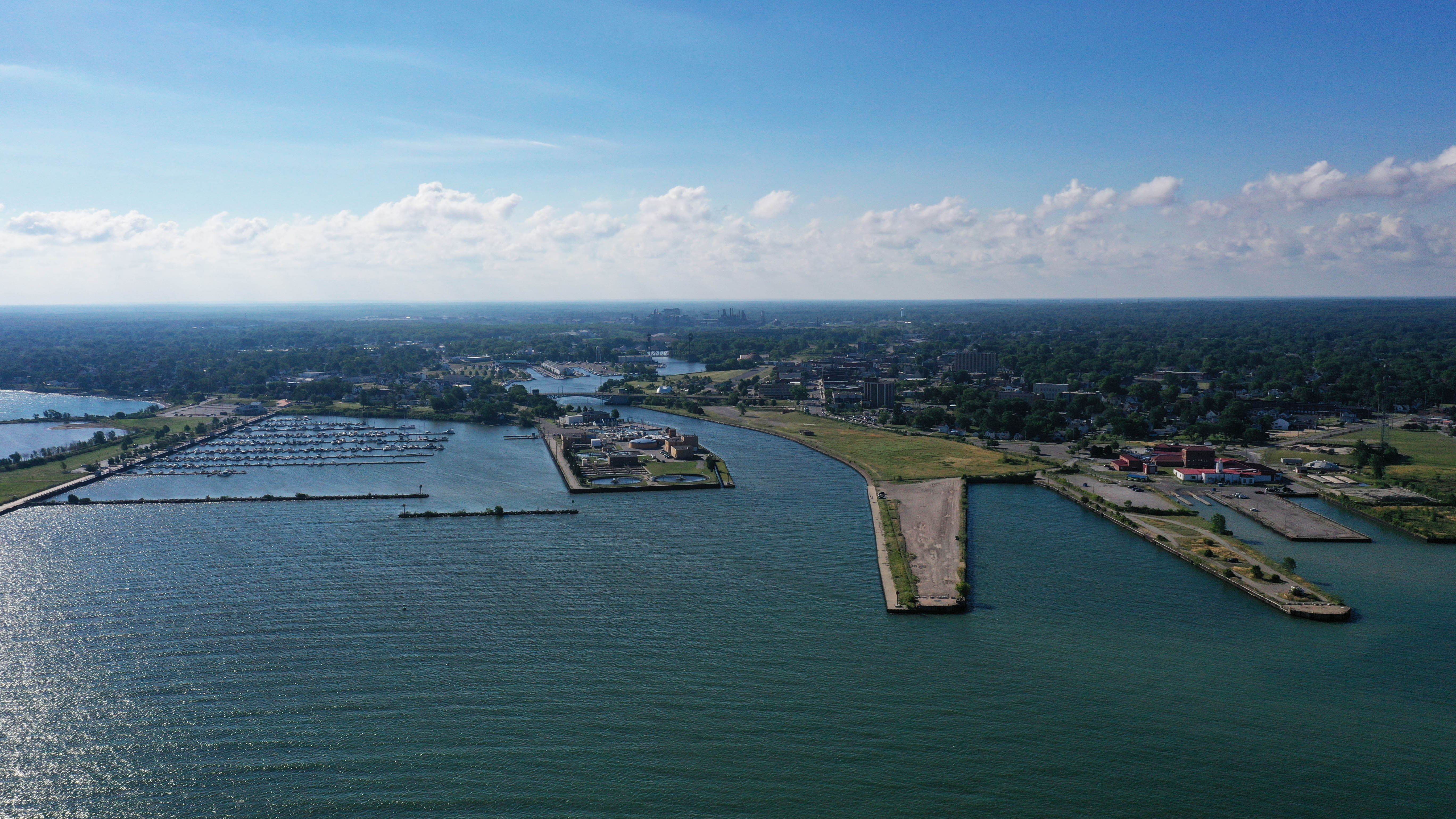
Lake Erie has always been the place where things come together. Iron ore arrives from the upper lakes. Coal comes up from the south. Limestone moves in from quarries across the region. The ports along the south shore turned those raw materials into steel, ships, and an entire regional economy.
The Port of Cleveland still handles about 13 million tons of cargo every year. The Cleveland Bulk Terminal moves iron ore for Cleveland-Cliffs at a rate of 5,200 tons per hour through its automated ship loader. In February 2026, the Port approved nearly $8 million in contracts to modernize the aging ore conveyor system, along with solar panels, electric reach stackers, and electric tugboats.
Conneaut still receives iron ore by lake freighter for rail transfer to Pittsburgh-area mills. Lorain's shipping days are quieter now, but the infrastructure that built the city is still visible along the Black River.
The Fleet: Then and Now
At its peak in the mid-20th century, roughly 300 lakers worked the Great Lakes. Today the U.S.-flag fleet is down to about 45 vessels operated by 13 companies. But those ships are far more capable. One modern 1,000-footer carries as much cargo as six 610-foot vessels from earlier eras.
The fleet moves more than 90 million tons of cargo annually. Iron ore (taconite pellets) is still the number one commodity, followed by limestone, coal, salt, and grain. The full Great Lakes/St. Lawrence Seaway system, including Canadian and foreign-flag vessels, handles over 160 million metric tons per year, reaching approximately 50 nations.
Milestones and Turning Points
Some moments define the industry. The Seaway opened the lakes to ocean vessels. The Fitzgerald reminded everyone what the lakes can do. And after a 40-year gap with no new construction, the Mark W. Barker proved someone was still willing to invest in the fleet.
The St. Lawrence Seaway has moved more than 2.5 billion tonnes of cargo valued at over $375 billion since opening in 1959. The full system stretches 3,766 km from Duluth to the Atlantic, with 19 locks across two countries.
Winter on the Lakes
The shipping season runs roughly 42 weeks. When ice forms, the Coast Guard's Operation Taconite kicks in. It is the largest domestic icebreaking operation in the country, covering Lake Superior, the St. Marys River, the Straits of Mackinac, and Lake Michigan.
Seven cutters work the ice, led by the USCGC Mackinaw (WLBB-30), a 240-foot heavy icebreaker. The Coast Guard works alongside the Canadian Coast Guard under a bilateral agreement. Together they keep roughly 1,000 vessel transits moving through the winter months.
The 2026 season opened with ice still covering much of the western Lake Superior approaches. The Tregurtha needed an icebreaker escort just to reach the Duluth canal. That is a normal March on the Great Lakes.
One More Ship on the Horizon
The Great Lakes shipping industry does not get much attention outside the region. There are no container cranes or massive port complexes. Just long ships, bulk cargo, and a system that has been running since before the Civil War.
But every ton of steel in a car built in Detroit or a bridge built in Cleveland started as a pile of taconite pellets on a dock in Duluth. It crossed Lake Superior, locked through at the Soo, and came down Lake Huron and Lake Erie to a mill on the south shore. That supply chain has not changed in over a century. The ships got bigger. The process stayed the same.
Next time you see a freighter on Lake Erie, you are watching the same thing people watched in 1855.
---
Sources: U.S. Army Corps of Engineers; Lake Carriers' Association; U.S. Coast Guard; National Transportation Safety Board; Great Lakes St. Lawrence Seaway Development Corporation; Port of Cleveland.